

Hello, I’m Nicola.
Thank you for taking the time to explore my work.
I’m the founder of Madder Cutch & Co, a textile studio shaped by a long-standing fascination with how colour behaves and how it can be used more responsibly.
Before establishing the studio, I spent many years teaching chemistry. My interest in textiles ran alongside that career, eventually leading me to leave the classroom and formally retrain in design. I completed an MA in Sustainable Textile Design at Chelsea College of Art and Design, graduating with distinction.
What emerged from that period of study was a clear direction: to work with colour in a way that respects both material and environment.
Madder Cutch & Co grew from that intention, combining scientific understanding with considered textile practice.
Why Plant Dyes?
Much of the modern textile industry relies on synthetic dyes derived from petrochemicals. My work began as a response to that reliance.
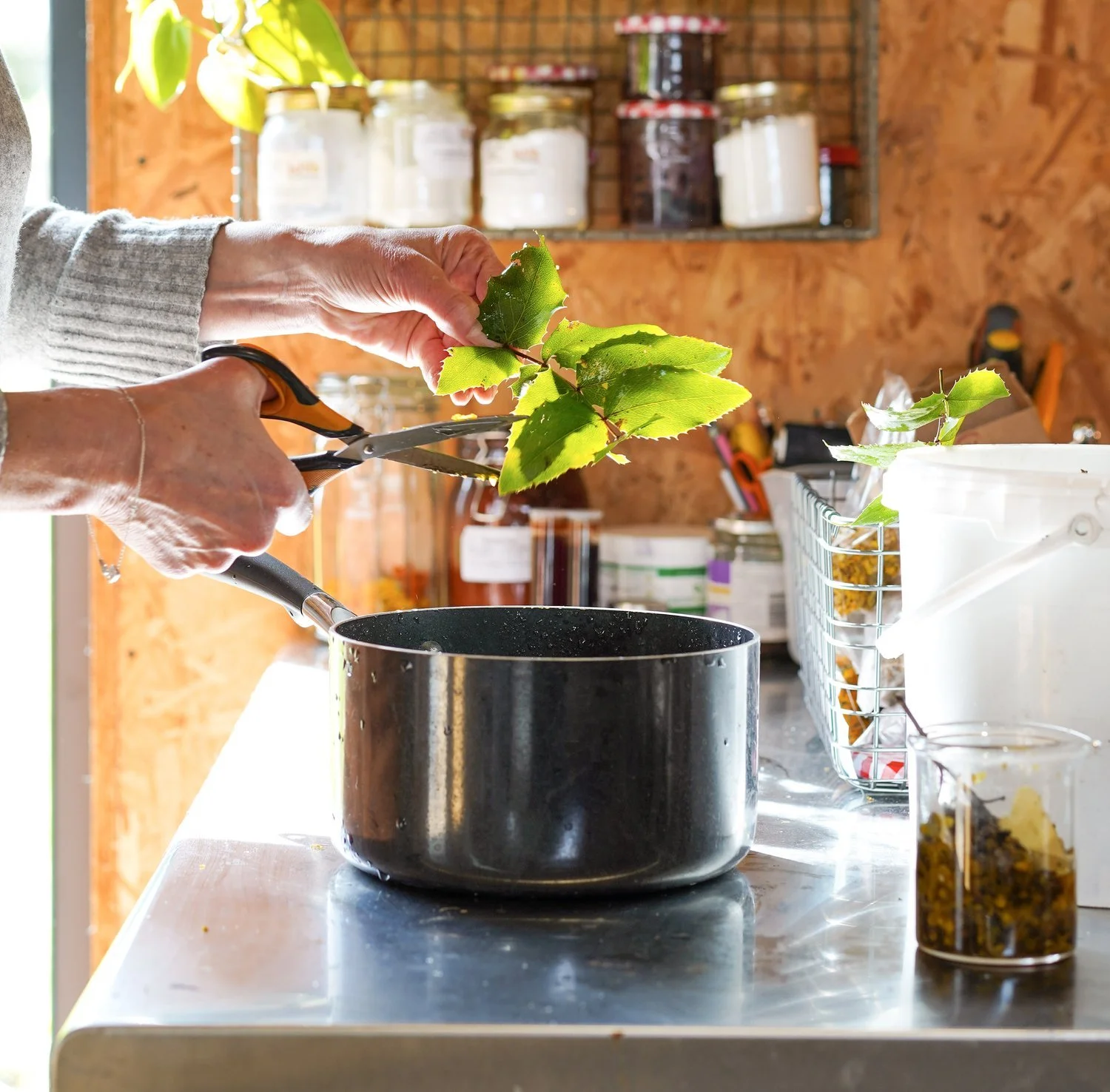
Using plant-based dyes allows colour to be approached differently. Slower, more responsive, and grounded in natural processes. The materials I use include extracts from woad, weld, madder and cutch, alongside pigments such as charcoal.
Each dye is prepared with care and understanding, informed by my background in chemistry as much as by design.
The aim is not novelty, but integrity.


Every pattern begins by hand.
I draw from observation, often from plants growing close to the studio, and develop these sketches into repeat compositions. The repetition is deliberate and rhythmic, designed to sit comfortably within interior spaces for use on furniture and curtains as well as pops of details on cushions and lampshades.
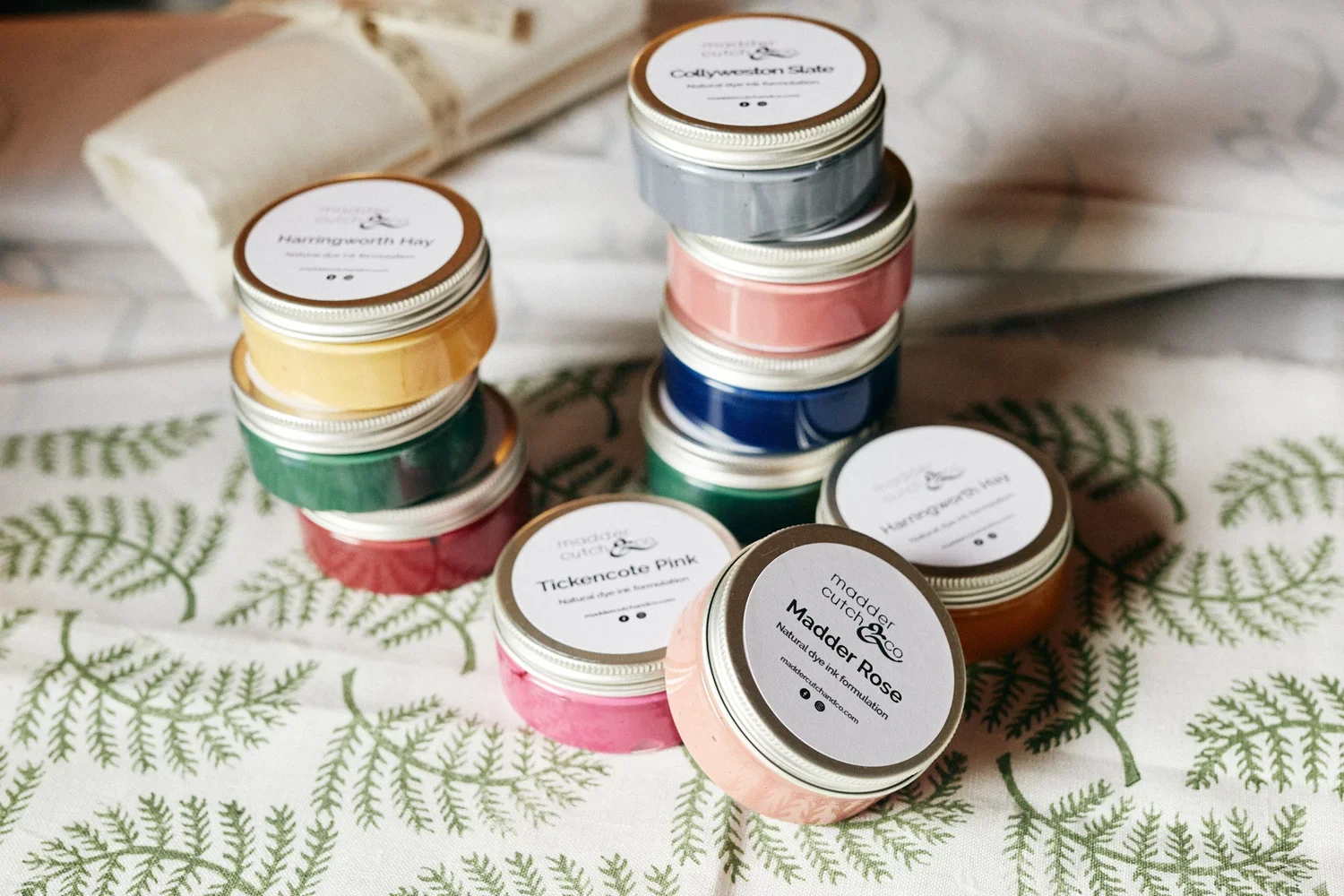
Natural linens.
The linen I print onto is woven in the UK. It provides a durable and natural ground for plant-based colour.
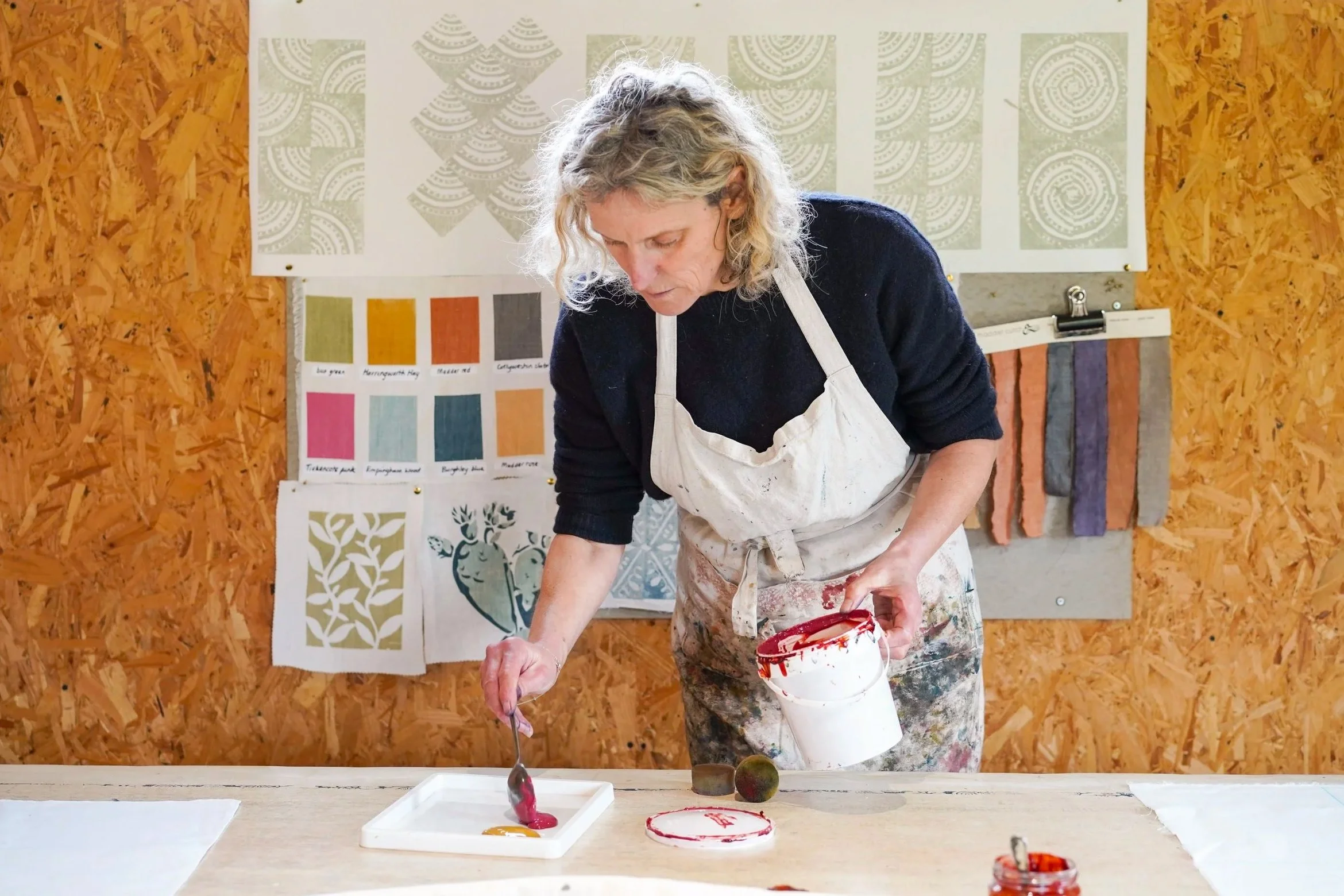
Printing is carried out by hand, allowing me to remain closely connected to each stage of production. Working at this scale means decisions are considered rather than automated.
A Studio in Stamford.
Based in Stamford, Lincolnshire, the studio draws on its surroundings, from the plants that shape a design to the names of each collection.
Working independently allows me to maintain full control of process and quality, while remaining responsive to bespoke enquiries and new developments. The studio also hosts small workshops, where participants are introduced to plant dyes and hand printing within the same working space in which the fabrics are made.

Color Over Time.
Plant-derived colour carries its own character. While fabrics are tested to ISO 105-B02 standards for lightfastness, natural dyes may soften gently with age, particularly reds.
These shifts are part of the nature of working with organic materials. Rather than static uniformity, the cloth reflects time and use.
Further information about testing and care is always available on request.

Sharing Knowledge.
Alongside producing fabrics, I offer natural dye kits, inks and workshops for those wishing to explore plant-based processes in their own creative practice.
An understanding of materials changes how we design with them. Teaching and sharing knowledge remains an important part of the studio’s work.